The Blessing
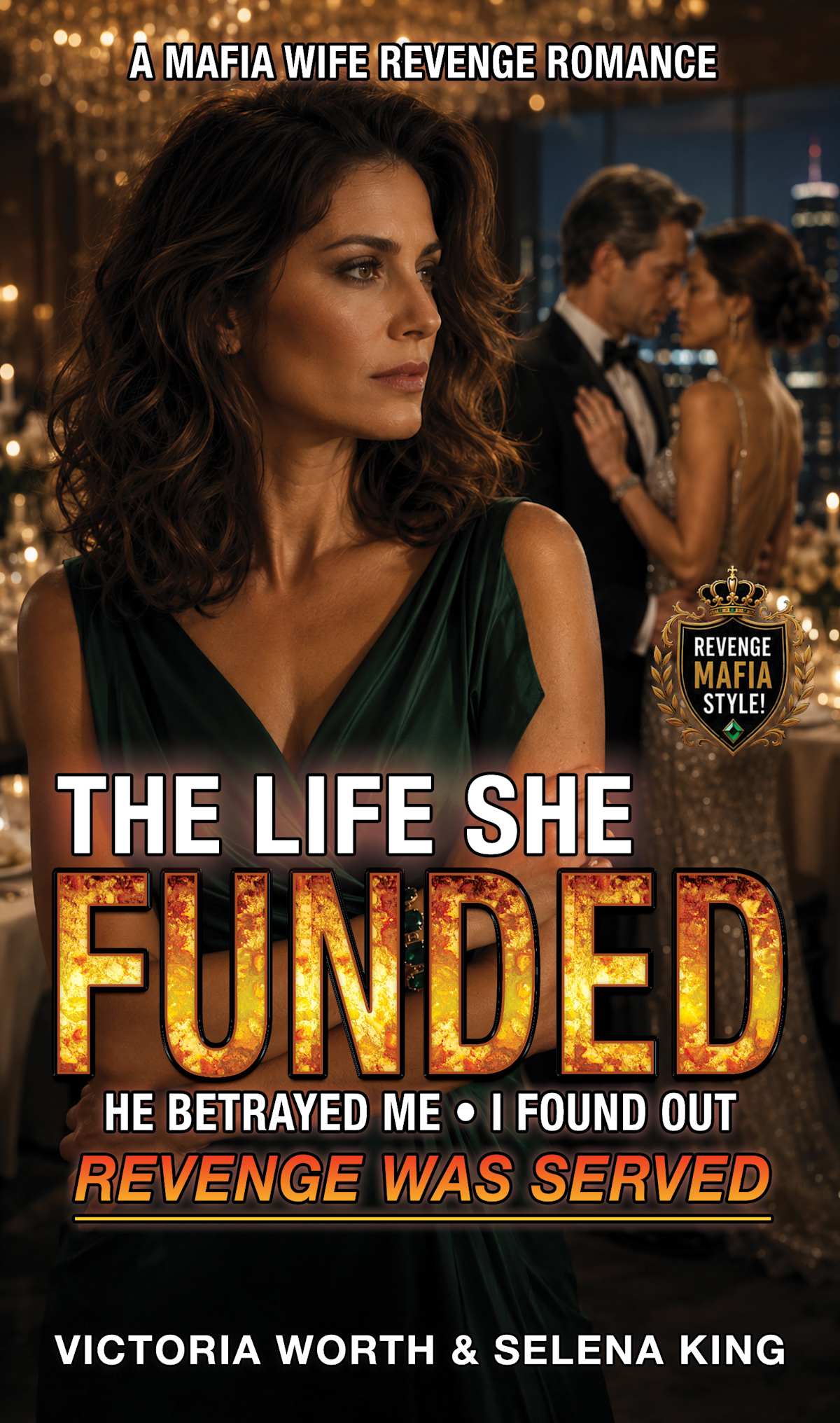
A missing scene from The Life She Funded — twelve years before the novel opens, the day Massimo Rinaldi asked Carlo Benedetti for his blessing to marry Caterina Rossetti.
Carlo Benedetti had learned, over three decades of building an empire out of ledgers and loyalty in roughly equal measure, that the requests men were most nervous to make were usually the ones that told him the most about their character. A man who asked for money showed you his need. A man who asked for territory showed you his ambition. A man who asked for a woman showed you everything, if you knew how to watch him ask.
He watched Massimo Rinaldi ask on a Sunday afternoon in late October, in the same office where he now signed off on restaurant openings and quarterly board reports, though the room had smelled less of polished walnut back then and more of the cigars his father had never fully given up.
Massimo stood rather than sat, which Carlo noted and filed away. A confident man sat. A man performing confidence stood, because standing gave him somewhere to put the nervous energy his voice had already decided to hide.
"I'd like your blessing," Massimo said, "to ask Caterina Rossetti to marry me."
Carlo didn't answer right away. He let the silence do the work it usually did, watching Massimo's jaw tighten by degrees the longer the room stayed quiet.
"You've spoken with her father."
"I have. He said the decision belonged to you as much as to him." Massimo's mouth curved into the easy smile that had carried him through six years of careful advancement inside the organization, capo to lieutenant to the man Carlo now trusted with three of his hotel properties. "He said you'd understand why I came to you first."
Carlo did understand, and understanding it didn't make the moment simpler.
Vittorio Rossetti had been a friend before he'd been an ally, back when both of their fathers still ran the tables where such friendships were made or broken in a single hand of cards. When Vittorio's own business had needed protecting through a difficult decade, Carlo's family had provided it, quietly, the way real debts were always paid in this life, without a single document that named the favor for what it was. Vittorio's daughter marrying into the Benedetti orbit would settle that debt in a manner both men could live with, cleanly, without either family losing face over what had once been owed.
It was, by every practical measure Carlo had spent his life learning to trust, an excellent match.
He thought of Caterina at nineteen, the summer she'd worked three months in his events office because her father had asked him to give her something useful to do before university, and she had reorganized the seating charts for the Policemen's Benevolent gala so precisely that four separate captains had complimented Carlo on an evening he'd had almost nothing to do with. She'd stood in the doorway of his office afterward, not proud exactly, just certain, the particular certainty of someone who already knew her own competence and had simply been waiting for someone else to notice it too.
I promote people for two reasons, he'd told her that night, only half joking. Competence. Character. She'd laughed, because she'd thought he was teasing her, and he'd let her think that, because the alternative was telling a nineteen-year-old girl that he'd just decided something about her future she hadn't asked him to decide.
He had not, in the years since, changed his opinion. If anything, watching her grow into the woman standing at the edge of every family gathering with a drink she never quite finished and an ear for every conversation happening around her, he had grown more certain of it, in the careful, contained way a man permits himself to be certain about someone else's daughter.
He looked at Massimo now and tried to see what she might see in him.
The ambition was obvious enough, and ambition wasn't a flaw in this life, only a tool, useful or dangerous depending entirely on what fed it. Massimo was handsome in the way that made rooms lean toward him. He was clever with numbers and cleverer with people, which was a rarer gift than either alone. He had never once, in six years, given Carlo a reason to doubt his loyalty to the family, and Carlo had tested him more than once, the way he tested every man he intended to trust with something that mattered.
And yet.
Carlo had built his life on reading the small tell beneath the performance, the crack in the mortar that the fresh paint hadn't quite covered. Standing across the desk, watching Massimo ask for a woman with the same practiced ease he used to ask for a larger allocation of casino floor, Carlo felt the smallest, most unwelcome flicker of that instinct now.
He couldn't have named it, not precisely. It wasn't dishonesty. Massimo believed every word he was saying in this room. It was something closer to appetite, a hunger that had learned to wear good manners the way a soldier learned to wear a suit that fit, and Carlo had lived long enough to know that appetite, given enough years and enough comfort, rarely stayed satisfied with what it had first been granted.
He thought of saying so.
He thought of Vittorio, and the debt, and Caterina's own face if her father's oldest friend told her, at twenty-two, that he had reservations about the man she'd already decided she loved. He thought about how certain she'd looked, four years earlier, correcting his seating chart in a doorway, and understood that a woman who trusted her own judgment that completely would not thank him for doubting it on her behalf, not without a single fact to hang the doubt on.
He had no fact. He had only the tell.
A man in Carlo's position learned, sooner or later, which instincts were worth acting on and which were simply the cost of watching too many rooms for too many years, seeing shadows in perfectly ordinary furniture. He decided, that Sunday afternoon, that this instinct belonged to the second category. He would be wrong about that decision for twelve years before he learned exactly how wrong, and by then the cost of it would already be sitting across a conference table in Giancarlo Vieri's office, itemized and dated and utterly beyond his ability to take back.
"You have it," Carlo said. "My blessing."
Relief moved visibly across Massimo's face, quick and genuine, and Carlo let himself believe, because believing was easier and because nothing yet had given him a reason not to, that the relief was for Caterina and not simply for the door it opened.
"Thank you." Massimo extended his hand, and Carlo shook it, the way he had shaken a thousand hands that sealed a thousand arrangements in this office, each one a promise he intended to hold the other man to.
"Take care of her," Carlo said, and meant it as plainly as he had ever meant anything. "She is not simply Vittorio's daughter to me."
"I know what she is."
He didn't, not yet, not the way Carlo already suspected he should have made certain of before shaking on anything. But there was no clean way to say that to a man who had just been handed exactly what he'd asked for, and so Carlo said nothing further, and Massimo left the office already composing, Carlo imagined, the words he would use to propose.
He found her in the hallway outside, sitting on the bench beneath the framed photograph of his father's first restaurant, the one that had grown into everything the family now owned. She stood when she saw him, smoothing her skirt with both hands, and he recognized the gesture from the girl who had once stood in his doorway certain of her own seating chart.
"Well?" she asked.
"You have my blessing, if that's what you came for."
"It isn't why I came." She studied his face a moment longer than the question required, the same unhurried attention she'd give a guest list years later, checking it against something only she could see. "I wanted to know if you meant it."
"I don't say things I don't mean, Caterina."
"No," she agreed. "You don't." Something in her expression eased, though not entirely, and Carlo would think of that incomplete ease often in the years ahead, long after he understood what it might have been trying to tell him. "Thank you, Uncle Carlo."
She had called him that since she was a child, an honorific that belonged to no blood between them and all the loyalty that mattered more than blood in a family like his. He let himself enjoy it one last time, not yet knowing how much distance the word would need to travel before it could honestly become something else.
"Go," he told her. "He's waiting to ask you properly."
She left down the corridor with the light, certain step he would watch her carry into every room for the next twelve years, through galas and ledgers and finally through a courthouse hallway he had not yet imagined and could not, that Sunday, have prevented even if he had.
Alone afterward, Carlo stood at the window the way he still stood at it now, twelve years and a great deal of ruin later, watching the city go on beneath him exactly as it always had.
He told himself, that afternoon, that he would watch. That was the whole of what he could honestly offer a woman who had never once asked him to protect her, only to see her clearly, and he had believed, standing at that window in October, that watching would be enough.
It would take him twelve years and a broken bracelet clasp to learn how wrong he'd been about that too, and by the time he understood it, the watching had already turned, quietly, patiently, into something else entirely.
To continue reading the series
-------------------------------------------
Thank you for reading! I hope you enjoyed the characters, story, and twists! If so, you might want to give my short book, No Witness for My Cheating Husband, a try. It’s FREE when you sign up to join my email reader club!
My cheating husband needed my notary stamp to fund his mistress.
Too bad I’m the witness he should have feared.
On Tuesday afternoon, I watched an elderly woman sign a power of attorney with a shaking hand.
On Tuesday night, my husband handed me a felony over steak and red wine.
He called it a favor. A refinance document with his business partner’s signature. One tiny stamp from his notary wife so the deal could close on time.
But I don’t stamp favors.
I witness signatures. I record names. I keep a journal the law already trusts.
At first, I thought my husband was trying to steal from his business partner.
Then I found the money. And the mistress.
He thought I’d be a good wife. He thought I’d look away.
He thought wrong.
For readers who love: cheating husband revenge, mistress-funded fraud, forged documents, wife gathers evidence, notary journal payback, financial betrayal, no reconciliation, and justice served cold.
Download No Witness for My Cheating Husband for free when you click here to join my reader club!